Published · By Sailing Beyond Limits
Total Solar Eclipse 2027 in Spain: Land vs. Sea Viewing Guide
Should you watch the 2 August 2027 total solar eclipse from land or from a boat? Duration by town, weather risk and access, compared side by side.
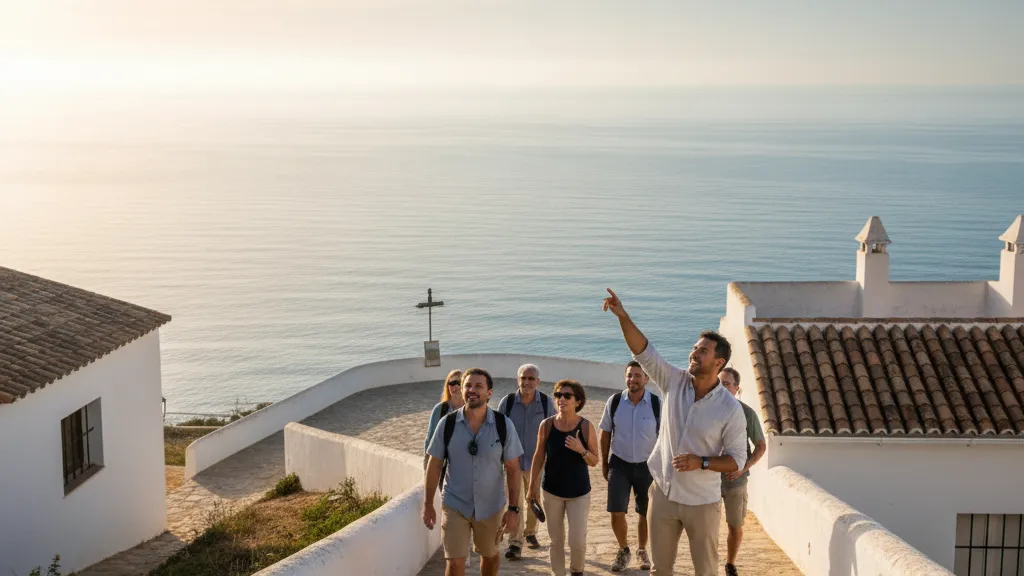
The total solar eclipse of 2 August 2027 is the only one visible from mainland Europe this decade, and the entire decision comes down to one question: do you watch it standing on a beach, or from the water?
This guide compares both options on the three factors that actually determine whether you see the corona — duration, weather resilience and access — using figures from Spain’s Instituto Geográfico Nacional (IGN).
Duration: what each location actually gets
Spain’s national maximum is 4 minutes 48 seconds in Ceuta. On the mainland, the Strait of Gibraltar–Costa del Sol corridor is the only stretch inside the umbra.
| Location | Totality | Practical constraint |
|---|---|---|
| Ceuta | 4m 48s | National maximum, on the African shore — requires a ferry crossing |
| Tarifa | ~4m 39s | Longest on the mainland; severe traffic risk and coastal humidity |
| Gibraltar | ~4m 28s | Near the centreline; dense urban and port infrastructure |
| Algeciras | ~4m 26s | Direct line of totality; heavy industrial and port setting |
| Sotogrande (San Roque) | ~4m 17s | Marina access, clear sea horizon, nautical departure point |
| Estepona | ~3m 40s | Inside totality but off the Strait axis |
| Cádiz | ~2m 56s | Well off the centreline |
| Málaga city | ~1m 57s | Short duration, high urban density |
The spread between Tarifa and Sotogrande is about 22 seconds. That is the entire prize for choosing the harder location — and it only pays out if the sky above you is clear at 10:45 CEST.
For a town-by-town breakdown of the path across Andalusia, see our guide to where the 2027 eclipse is visible in Spain.
Weather: the factor that decides everything
Andalusia is famous for summer sun, but early August mornings along the Strait can produce localised coastal haze, sea fog and thermal cloud as the land heats up.
Why a fixed position is the real risk
On land, you commit to a spot hours in advance. If a cloud bank drifts over it at 10:45, there is no recovery — totality lasts four minutes and then it is gone for a generation. The Sun sits high enough (~38° altitude, azimuth 96°) that terrain is not the problem. Low cloud over a locked shore point is.
What mobility buys you
From a boat you get an unobstructed 360° horizon and, critically, the option to move. A few nautical miles is often enough to clear a local cloud bank. This is why experienced eclipse chasers weight mobility above raw duration.
Our analysis of cloud cover and coastal microclimates goes into the historical data in detail.
Access: the constraint people underestimate
Every viable land site along the Strait shares one problem: everyone else is going there too. Tarifa and Algeciras have limited approach roads, limited parking and a single narrow window in which hundreds of thousands of visitors all want to arrive. Coastal towns will be saturated from early morning.
A marina departure sidesteps this entirely. You board at a fixed time at Puerto Sotogrande and the fleet positions itself in open water while the roads behind you fill up.
Land vs. sea, side by side
| Land | Sea | |
|---|---|---|
| Maximum duration | Slightly longer at the centreline | ~4m 17s off Sotogrande |
| Cloud contingency | None — fixed position | Reposition within minutes |
| Horizon | Often blocked by terrain or buildings | Unobstructed 360° |
| Crowds | Severe on Strait beaches | Controlled, limited capacity |
| Access | Road congestion, parking scarce | Scheduled boarding at the marina |
| Cost | Low, but travel and lodging spike | Charter seat, all-inclusive |
The verdict
If your single priority is the longest possible number, go to Ceuta and accept the ferry logistics. If you want the best chance of actually seeing the corona, the maritime option off Sotogrande delivers more than four minutes of totality with a clear horizon, weather mobility and no traffic.
Treat duration as one axis, not the whole decision. The difference between a good eclipse and a missed one is rarely seconds — it is whether anything was in the way.
For exact contact times and coordinates, see our IGN timings guide for Sotogrande and the Strait. You can also check any town on the official IGN map. If you want those four minutes from a clear horizon at our sea coordinates, book a seat on the Sotogrande flotilla.